
Multi-Source Data & Finance Automation

Messy data from many systems, sorted out automatically.
Each system exports data in its own format. The same item can be spelled ten different ways. Making the table is easy. The hard part is matching the items up first. Get one wrong and everything after it is off. Many teams still do this by hand every month. It is slow and easy to get wrong.
We bring the data from every system into one place. We turn names, sizes and units into one standard set. Obviously bad data is stopped as it comes in. Then we write your accounting rules into the process. Reports come out on their own, with problem rows marked in red. Before handover, the system works out the results without looking at the manual answers. Where they don't match, we fix the rules and run it again.
Manual work on monthly reconciliation (checking that the accounts match up) drops by more than 90%. The time to produce reports is also more than 90% shorter. It can run on a schedule. Results stay within 2% of the manual check. Every figure can be traced back to the source row it came from.
Gallery
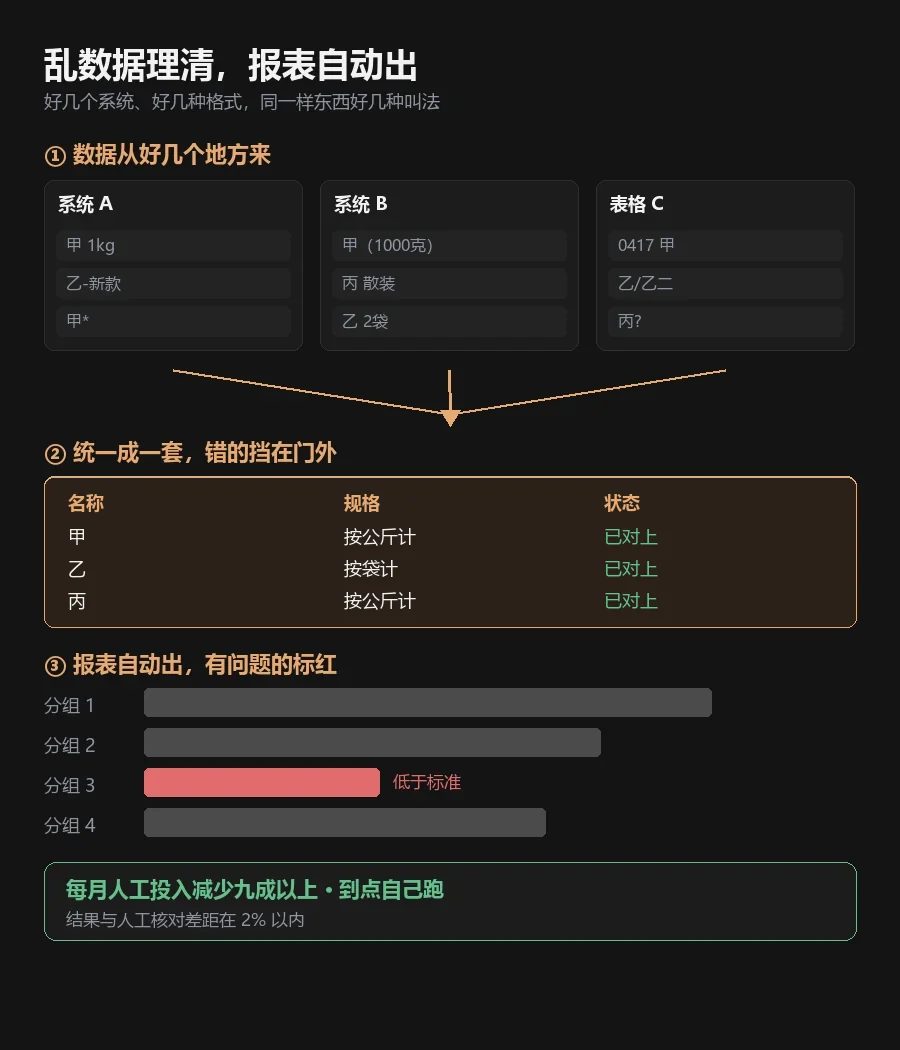
How it works: data from several systems is matched into one set. Then the report flags problems in red. (Diagram, not real data.)
Ready to Get Started?
Contact us to discuss your specific needs and learn how we can help transform your business.