

 Products & Services
HollywoodFactory
A Hollywood-style production line, run by AI.
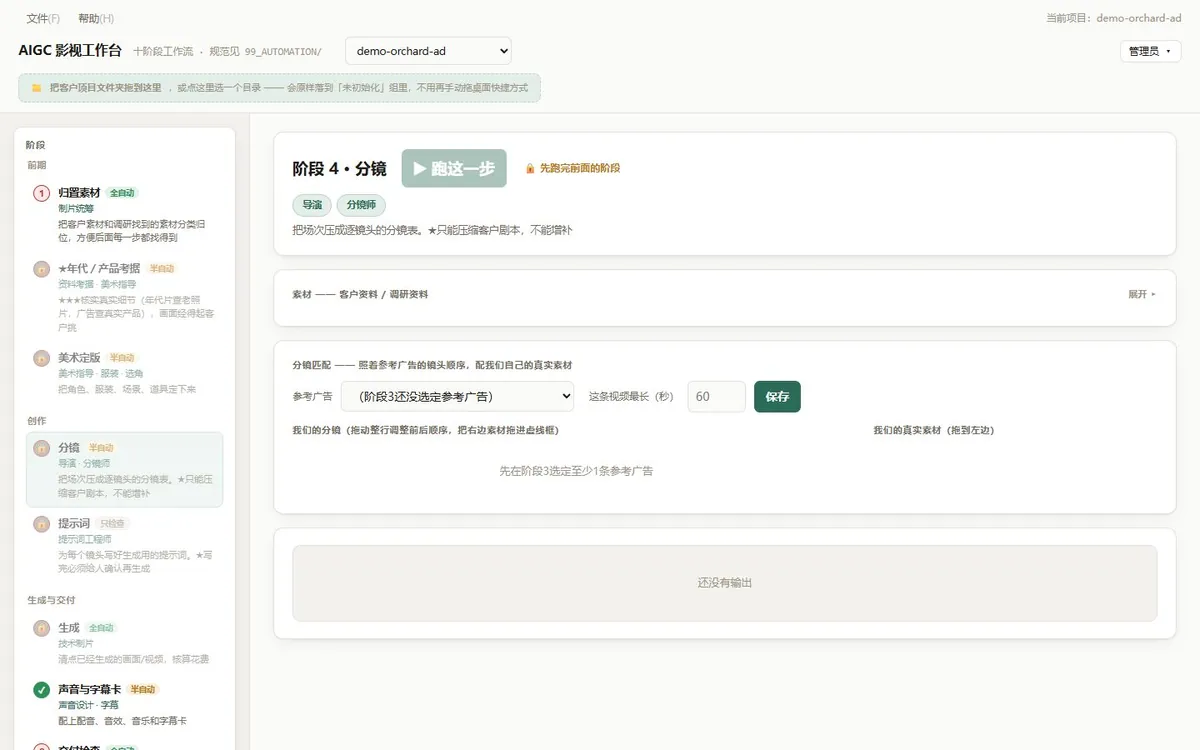
HollywoodFactory splits making a film into fixed stages. The stages are: breaking down the script, designing characters and sets, storyboard (a drawn plan of each shot), generation, sound, titles and delivery. Each stage has its own checks. Nothing moves on until it passes.
Characters and sets look the same from shot to shot. So far fewer takes are thrown away. That lowers the cost of each finished minute.
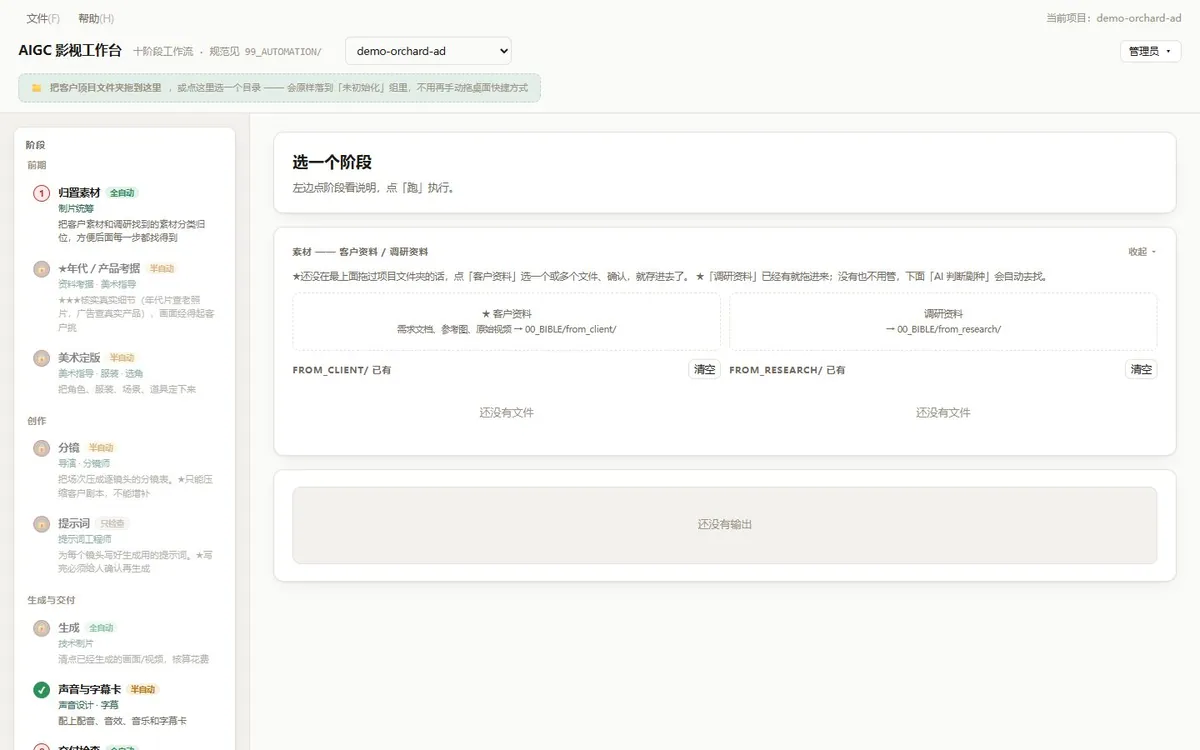
The line runs in our own production workbench, the software the team works in. It sets up each project and sorts the client's material. It locks each stage until the one before it is done. Period dramas (stories set in the past), short dramas and commercial ads each follow their own path. The workbench picks the path from the client's brief. The client's script is the final word. A storyboard can shorten it, but never add scenes to it.
What is included
Fixed stages
Every project goes through the same set of steps. So quality does not depend on one person's memory.
Consistent characters
Character and set sheets (reference pictures of how they look) are locked before generation. Every shot reuses them.
Checked before the next step
Each stage is reviewed before the next one starts. So mistakes don't pile up at the end.
Research with sources
Before any design work, we check what things really looked like. For period pieces, we use real photos from that time. For ads, we look at the real products and shops. Each finding is written down with where it came from.
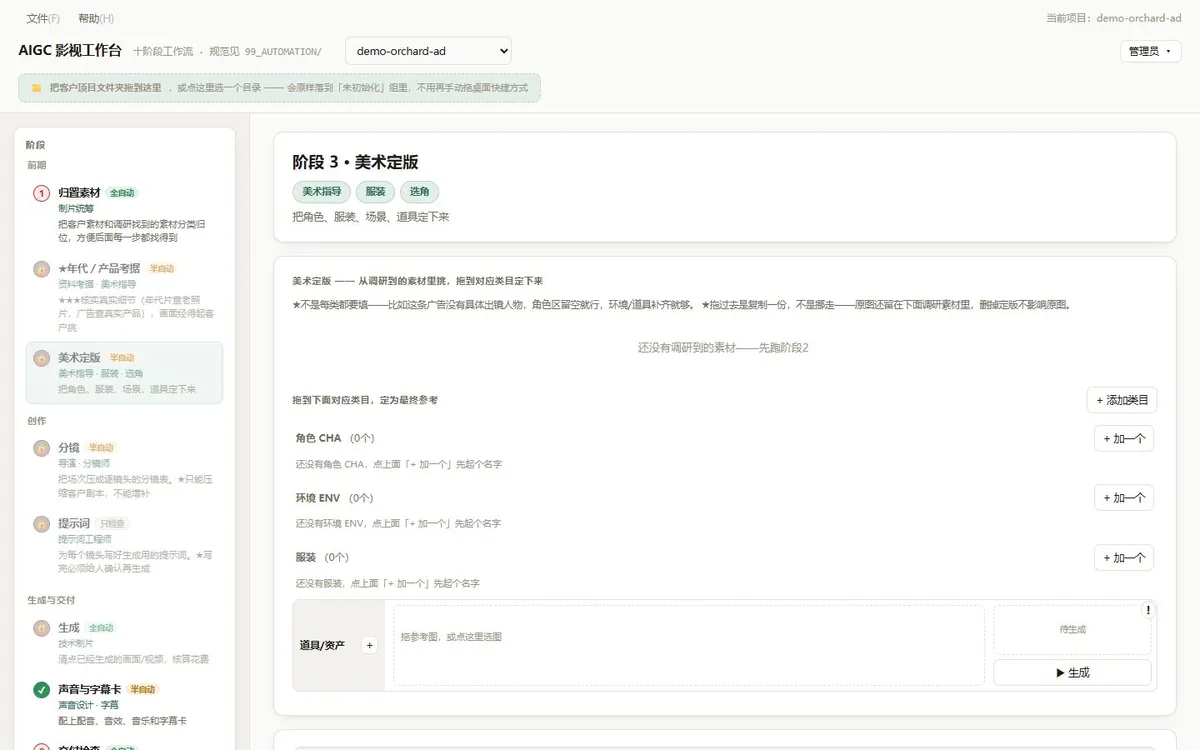
Art board for final references
Drag research images into four slots: character, set, costume and prop. This locks the final look. The original images stay untouched, so nothing is lost.
Automatic checks before generating
Before a shot is generated, a program checks its prompt. A prompt is the written instruction given to the AI. The program looks for missing parts and banned phrases. It also checks the number of shots and the image ratio (width to height). If a shot fails, it is not sent.
Key strengths
No generation without human approval
A person reads and approves every video prompt before it runs. Each new take is saved as a new version. It never overwrites an older one. A rejected take can still hold the one shot that worked.
Built on lessons from real productions
Our rules come from mistakes we made and fixed on real projects. Each rule notes where it came from. So nobody deletes it by accident.
Plan pacing before writing prompts
Before any prompt is written, we time the dialogue at a normal speaking speed. If a scene doesn't fit in one shot, we split it into two. We don't rush it to make it fit.
One workbench for the whole team
Team members open the workbench in their own web browser, on the office network. Each person has their own login. Spending is recorded for each project and each person.
In pictures
Case studies
Start with one small pilot.
Tell us the task. We will say whether it is worth doing.