



What the study did and found
Dull, Dirty, Dangerous? is a preprint by Siyi Yu of Purdue University’s Daniels School of Business (arXiv 2611.06888, 4 November 2026); we could not verify its peer-review status. It is observational: it looks for patterns across jobs in existing public data. As the author puts it, “Neither measure observes deployment or job loss.”
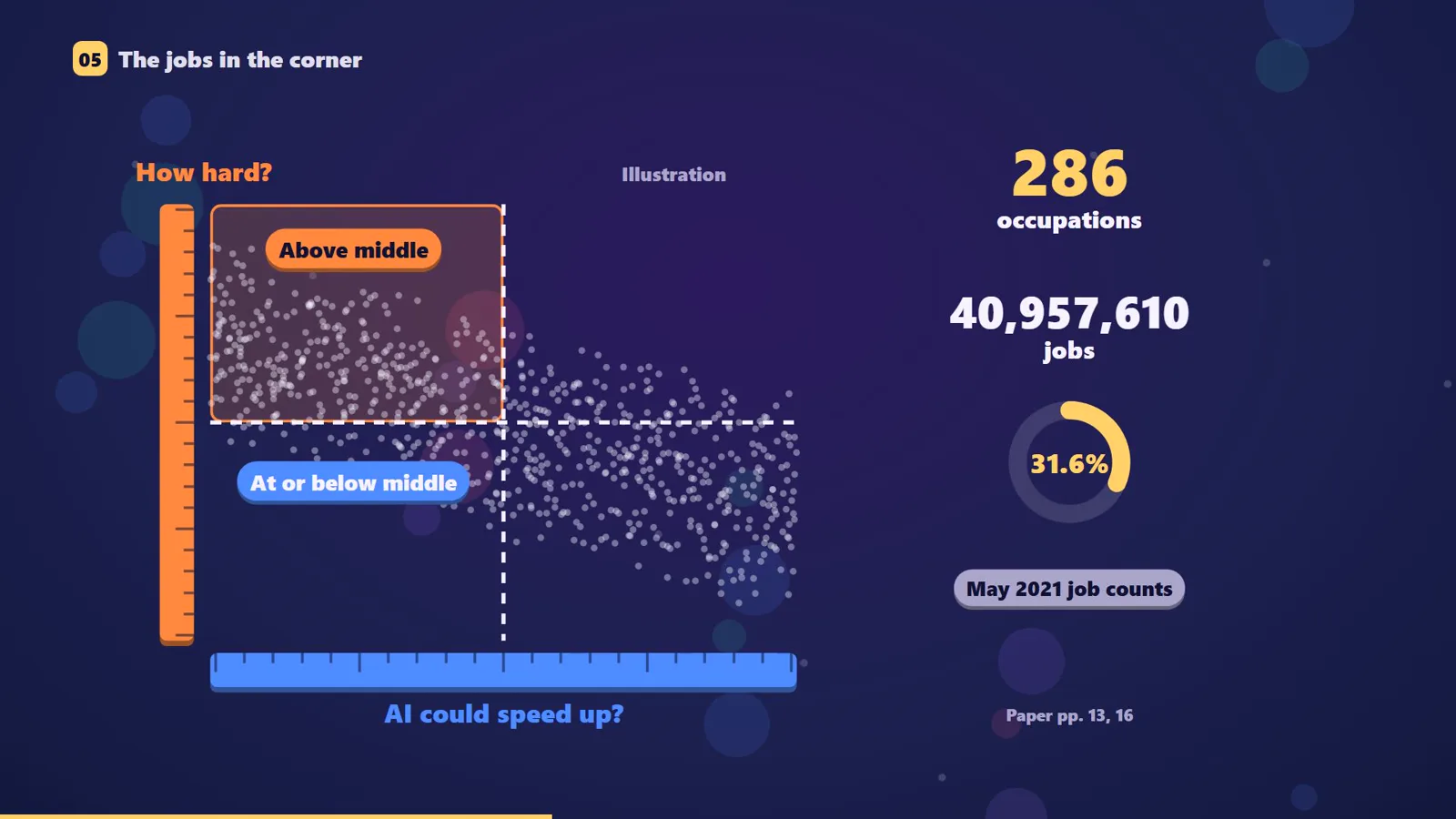
Picture two rulers held against 754 US occupations (92% of US jobs in the May 2021 government counts). One rates how hard the working conditions are, from 21 ratings in the O*NET 31.0 job database, grouped as dangerous, dirty and dull. The other rates how much an AI language model could speed the work up, from two published scores (Eloundou and colleagues; Felten and colleagues, 2021). This “exposure” is a rating of potential, not use.
The higher a job sits on the AI ruler, the lower it tends to sit on the hard-work ruler: about a third of a step down for each step up. But once the author accounts for how physical each job is, the link shrinks sharply (−0.343 to −0.093), and in the fullest model the range for the language-model score includes zero. The author stresses this describes a pattern, not a cause.
One corner, hard work with low AI scores, holds 286 occupations and almost 41 million jobs: 31.6% of the jobs studied, from construction laborers to housekeeping cleaners. That counts jobs in 2021 data, not people at risk or wanting help.
How strong the evidence is
We followed the paper’s sources down to the original data, and it describes them accurately. But the main AI score’s raters were told the model has no physical tools or materials, and that source says manual work is not exposed for the time being. So part of the result is built into the ruler.
- The two AI scores use the same database and move together closely (0.833): not independent witnesses.
- We could not trace the slogan “dull, dirty, dangerous” to any study of workers.
- “Dull” means repetition and control, not boredom. Little say over your work was linked to the AI score more strongly than repetition, though that gap was not formally tested.
Our verdict: solid, but expected.
What our small experiment showed
We rebuilt the main chart from public data with a simpler index (9 of the study’s 21 ratings), writing down what we expected beforehand. Across 772 occupations the link was −0.70; within job families, −0.36 against the study’s −0.343. Adding physical demands cut ours to −0.15: more than half gone, as planned, though not as close to zero as the study. Our index has no education or pay controls, so the figures are not directly comparable. Data scientists ranked above 95 of 100 jobs on the AI ruler but only 9 on the hard one; construction laborers, 94 on hard and 12 on AI.
What to do with it
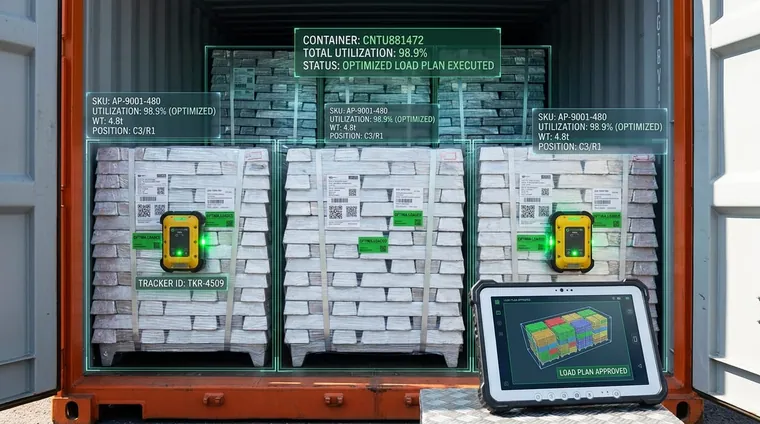
A low language-model score is not a shield. In one of our projects, cameras over a warehouse loading area checked each step against the standard procedure, looking at actions, not identities. Hand freight movers score near zero on the AI ruler, yet AI still reached their work.
When someone offers “AI that makes the job safer”, ask which task it changes, which condition gets better, and where the work goes. Then compare it with plain options such as staffing changes or safer equipment, as the study advises.